![[personal profile]](https://www.dreamwidth.org/img/silk/identity/user.png)


Entry tags:
What Does ‘Borderline Personality Disorder’ Look Like?
Originally published at Am I the Only One Dancing?. Please leave any comments there.

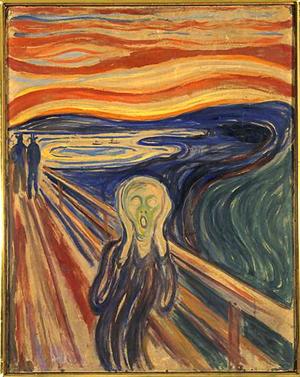
If you have worked in the community for any length of time, you may have heard the phrase “she’s a borderline” or “he’s a borderline” usually said with a sigh and/or a hint of exasperation. Many helping professionals find people with Borderline Personality Disorder (BPD) to be among the most challenging to help.
It is far better to understand than to condemn a person you are helping, and this article has been written with that in mind.
The essential characteristics of BPD center around difficult relationships with self and with others, which can make the behavior of someone with BPD very difficult to predict, as well as challenging to work with. Some behavior you will notice includes at least five of these (adapted from the DSM-IV-TR ):
):
):-
“Frantic” efforts to avoid being abandoned (even if it’s not a ‘real’ problem)
-
Having very intense relationships over and over where the person goes from believing the other is ‘perfect’ to believing they are ‘evil’ and back – sometimes repeatedly (or similar – the main point is intensity of emotion). This is not limited to romantic relationships. Helpers can often be the ‘other’ in this intensity.
-
Very unstable self image (like above: “I’m awesome” to “I’m the worst person in the world” and back, repeatedly and frequently).
-
‘Self damaging’ reckless behavior such as overspending, using drugs or alcohol, having dangerous sex (with strangers or in dangerous situations), binge eating, reckless driving, etc.
-
Repeatedly talking about, threatening, or attempting suicide, or self mutilating (cutting, branding, etc.)
-
Intense mood swings including sadness, irritability or anxiety, lasting a few hours to a few days.
-
‘Chronic feelings of emptiness’
-
intense anger that seems to come from nowhere, and/or trouble controlling anger, including physical fights.
-
Short lived paranoia when stressed, or ‘dissociative symptoms’ which include feeling like you are outside your body and can’t control it, feeling like the world isn’t real, or partially or completely forgetting whole incidents (amnesia).
We’ll repeat that people experiencing these symptoms can be extremely challenging to work with. The mood swings and changes in reactions to the worker can feel personal, uncomfortable, and even threatening or dangerous. Let’s also stress, however, that this is a treatable disorder, and that it is not okay to “write off” someone whose behaviors are difficult, without finding alternative solutions.
A great many studies have linked borderline personality disorder with long term early childhood trauma and chaos, and have theorized that it might be a particular form of post traumatic stress disorder, or PTSD. Most helpers who work with people with BPD have found it more useful to think of people with BPD as traumatized than as people with a “personality disorder”, because while trauma can be repaired and treated, we assume that “personalities” are set and cannot be changed, and this changes how we treat the person in front of us.
Part 2 of this post will cover common situations that occur when helping people with BPD, and how you can handle them effectively.
If you liked this advice, please like us on Facebook and help us get the word out!
To find more ways to help, return to Just Helping People
