Expand Cut Tags

No cut tags
odanu: b&w pic of a young me on a rocking horse (Default)

Originally published at Am I the Only One Dancing?. Please leave any comments there.

Share Button

Living with HIV

Pretty Red Ribbon Gear

My sister is living with HIV.

I don’t remember when I got the call, perhaps six months or a year after my mother died, so in 2000, maybe even late 1999. I know that all the open wounds from Mom’s death hadn’t healed yet and none of us siblings were very close at that time.

She was crying. Actually, she was totally, utterly freaked out. Or maybe that was a later conversation, after the reality hit. She’d tested positive. There’d been a workplace accident, and she’d gotten blood in an open cut on her hand.  And now she had a deadly disease. And I was stunned, and devastated, and utterly helpless.

Read the rest of this entry »

odanu: b&w pic of a young me on a rocking horse (Default)

Originally published at Am I the Only One Dancing?. Please leave any comments there.

Share Button

This little video has a catchy tune and an important message: Don’t do dumb stuff that will kill you.

For many years, an unofficial competition has raged, the Darwin Awards. At the link you will find over 400 documented cases of ‘What the f*ck was he/she thinking” for which we will never know the answer because the person died.

There’s a tendency to a great deal of schadenfreude in these cases, and to some extent, rightly so. When a person has spent his life fighting helmet laws and dies from a head injury after a car wreck it’s funny, right?

Except that it’s not. And deep down we know it, and that’s why we laugh. To err is human. “Man is the animal that laughs at himself” as Valentine Michael Smith said (via Robert Heinlein). And we laugh at ourselves because it hurts so bad. So yeah. Sometimes we abandon compassion, for a moment, because the ultimate human moment is to laugh at death, and the many, many ways we bring it on.

And then, we get back to shared joy and shared pain. We continue to try to improve our lives and the lives of others around us. We abandon judgment and embrace compassion. We seek knowledge. And still, we get it wrong. To err is human, remember?

As Mark Twain (Samuel Clemens) said:

Easier To Fool

Mark Twain (from Facebook meme, originally from an image in public domain)

People believe a lot of untrue things, sometimes as many (to misquote the White Queen) as three before breakfast.

I’m sometimes guilty of that myself. But my challenge for myself, over the next several years, is to use my compassion and my ability to write to help people distinguish between useful knowledge and ‘knowledge’ that causes problems for people by preventing them from investigating further, which is perhaps one of the best definitions of truth.

The Darwin Awards (film)

The Darwin Awards (film) (Photo credit: Wikipedia)

Back to the Darwin awards. There are lots of dumb ways to die. We invent more every day. It’s entirely possible that you or I might succumb to one of those. More importantly, however, there are a lot of dumb ways to live, ways that hurt us and the people around us, and we don’t have a nifty internet meme to identify them  and point and laugh.

Maybe instead we shoule be looking for ways to teach, to share, and to help people, rather than laughing and judging. So yeah, go ahead and laugh. The video, especially, is adorable. And then…

Maybe its time to start identifying ways to live better, and to keep on spreading joy until there’s no room for the sort of fear and hate that keep infecting the world. Or as Lennon said, ‘Give peace a chance’.

Enhanced by Zemanta
odanu: b&w pic of a young me on a rocking horse (Default)

Originally published at Am I the Only One Dancing?. Please leave any comments there.

Share Button
Disarm Anger

Angry Sphynx (Photo credit: Wikipedia)

Why disarm anger and not just walk away or react angrily yourself? Because most of the time, not only does it help the angry person, it helps you and the people you care about as well. You develop a skill that is useful at home, at work, and even in random public places.

You know the scene: The boss screams, the co-worker curses, the customer threatens, the sister, the uncle, the brother in law, the spouse, and the parent blame. You want to grit your teeth and find something better to do or get ready to do battle. And yet, if you take the time to disarm the anger, you’ll have a better outcome, and you know it.

I’m going to let you in on a a little secret. All of those angry people are in pain. Most of them are in the pain of fear or anxiety (which is like fear but on steroids and constant), and quite a few are in actual physical pain. And pain nearly always (though not always immediately) responds to kindness.

Read the rest of this entry »

odanu: b&w pic of a young me on a rocking horse (Default)

Originally published at Am I the Only One Dancing?. Please leave any comments there.

Share Button
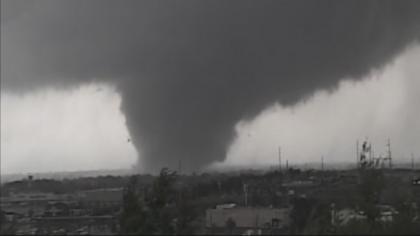
(the tornado that devastated Tuskaloosa in 2011)

A tornado, a hurricane, an earthquake, a tsunami or a blizzard has just struck. People are dead or missing, and property has been destroyed. You want to help (of course you do!), and for once you have the time available to volunteer – but you don’t know where to start what is needed. What should you do? And what shouldn’t you do?
Things to Do:
  • Call a reputable local, national or international charity with experience in responding to disasters and offer help
  • Be patient - in the immediate aftermath of a disaster, these places are busy. Even experienced disaster agencies often have difficulty getting all of the pieces of the response together. Bring something to entertain yourself during inevitable waiting and down-times.
  • Get educated. Attend classes the agency requires you to attend, or read up on conditions and procedures. If you want to volunteer for disaster services but there is not an immediate need, go ahead and get your training now.
  • Get booster shots and a check up — the aftermath of a disaster is a prime location for disease and injury.
  • Pack according to conditions. The agency you work with will probably have some advice. A rule of thumb is to pack light with only things you will need – and to bring with you any small items you may not be able to obtain at the disaster site. This may include medications, sunscreen, warm clothing layers, razors, and similar items. A good rule of thumb is to pack no more than you can comfortably carry.
  • Clear up all loose ends at home before heading out. Make sure someone ‘has your back’ with any responsibilities you need to delegate. Make a list and check off items.
  • It is very possible you will be living in a dormitory style setting while helping. Pack sleeping clothes accordingly, as well as any sleep comfort items you may need.
  • The conditions at disaster sites can be very stressful. Be sure you understand what you’re getting into. Listen to the experts for the disaster agency as they fill you in, and prepare yourself emotionally.
  • If you have strong doubts as to whether you’ll be able to ‘keep it together’ in the face of grief and anger and frustration on the part of disaster survivors, talk about your doubts with someone you trust and decide if you should really need to be on the front lines of this particular disaster.
  • Follow all instructions of law enforcement, firefighters, disaster agencies (non-profit and governmental) and other officials. Disasters are chaotic situations. You are there to help, not get in the way. Let the leaders lead.
  • Check your ego and your prejudices at home. Unexpected leaders often arise in volunteer situations. This is not about you, it’s about the survivors of the disaster.
  • Expect unhappy survivors to sometimes take it out on you. You’re there, they’re human, and you represent help that may not be perceived as ‘helpful enough’
  • Rest whenever you have an opportunity. Self care is vitally important in disaster workers. If you don’t take care of yourself, you won’t have anything to offer others.
  • Keep safety in mind at all times. Yours, survivors, and others.
Don’t do these things:
  • Jump in your car or on a plane and ‘just show up’. You are far more likely to be in the way and make more work for someone than you are to be helpful.
  • Bring a ton of ‘stuff’ to give to pass out to survivors. Other pieces of the disaster response will handle that. You will have difficulty carrying it and storing it in the typical disaster situation, and your gesture may interfere with coordinated efforts.
  • Be a pain in the neck. You are going to be working and living in what may be very stressful, unpleasant conditions. Whining, complaining, and demanding that others deal with you is not helpful.
  • Go wandering around the wreckage without approval. Disaster wreckage is dangerous, and authorities have enough tasks on their plates without dealing with volunteers who decide to go sight-seeing and injure themselves or cause other problems.
  • Demand gratitude from those you help. You may have survivors express gratitude, but for many people the anger and fear and grief make it impossible. Expect anger and grief.
  • Go outside the established parameters to help. For your own safety, the well-being of those you’re helping, and the liability of the organization you’re with, stick with the program. The program is there for a reason.
  • Beat yourself up over mistakes. You’re going to make them. Go easy on yourself.
  • Think you’re indispensable. You’re not. There were helpers before you got there, and there will be others after you leave.
Places to go for more information:
your local church or disaster agency

To find more ways to help, return to Just Helping People

 Subscribe and never miss an update!

If you liked this advice, please like us on Facebook and help us get the word out, or follow us on Twitter at @justhelpu

odanu: b&w pic of a young me on a rocking horse (Default)

Originally published at Am I the Only One Dancing?. Please leave any comments there.

Share Button

If you have worked in the community for any length of time, you may have heard the phrase “she’s a borderline” or “he’s a borderline” usually said with a sigh and/or a hint of exasperation.  Many helping professionals find people with Borderline Personality Disorder (BPD) to be among the most challenging to help. 

It is far better to understand than to condemn a person you are helping, and this article has been written with that in mind.

The essential characteristics of BPD center around difficult relationships with self and with others, which can make the behavior of someone with BPD very difficult to predict, as well as challenging to work with. Some behavior you will notice includes at least five of these (adapted from the DSM-IV-TR):
  • “Frantic” efforts to avoid being abandoned (even if it’s not a ‘real’ problem)
  • Having very intense relationships over and over where the person goes from believing the other is ‘perfect’ to believing they are ‘evil’ and back – sometimes repeatedly (or similar – the main point is intensity of emotion). This is not limited to romantic relationships. Helpers can often be the ‘other’ in this intensity.
  • Very unstable self image (like above: “I’m awesome” to “I’m the worst person in the world” and back, repeatedly and frequently).
  • ‘Self damaging’ reckless behavior such as overspending, using drugs or alcohol, having dangerous sex (with strangers or in dangerous situations), binge eating, reckless driving, etc.
  • Repeatedly talking about, threatening, or attempting suicide, or self mutilating (cutting, branding, etc.)
  • Intense mood swings including sadness, irritability or anxiety, lasting a few hours to a few days.
  • ‘Chronic feelings of emptiness’
  • intense anger that seems to come from nowhere, and/or trouble controlling anger, including physical fights.
  • Short lived paranoia when stressed, or ‘dissociative symptoms’ which include feeling like you are outside your body and can’t control it, feeling like the world isn’t real, or partially or completely forgetting whole incidents (amnesia).
We’ll repeat that people experiencing these symptoms can be extremely challenging to work with. The mood swings and changes in reactions to the worker can feel personal, uncomfortable, and even threatening or dangerous. Let’s also stress, however, that this is a treatable disorder, and that it is not okay to “write off” someone whose behaviors are difficult, without finding alternative solutions.
A great many studies have linked borderline personality disorder with long term early childhood trauma and chaos, and have theorized that it might be a particular form of post traumatic stress disorder, or  PTSD. Most helpers who work with people with BPD have found it more useful to think of people with BPD as traumatized than as people with a “personality disorder”, because while trauma can be repaired and treated, we assume that “personalities” are set and cannot be changed, and this changes how we treat the person in front of us.
Part 2 of this post will cover common situations that occur when helping people with BPD, and how you can handle them effectively. 

If you liked this advice, please like us on Facebook and help us get the word out!

To find more ways to help, return to Just Helping People

 Subscribe and never miss an update!

Profile

odanu: b&w pic of a young me on a rocking horse (Default)
Jenni's Space

January 2025

S M T W T F S
   1234
5678910 11
12131415161718
19202122232425
262728293031 

Most Popular Tags

Syndicate

RSS Atom

Style Credit

Page generated Dec. 24th, 2025 11:48 pm
Powered by Dreamwidth Studios